Claude Code Loop Engineering: How to Build an Agent That Actually Finishes
June 20, 2026 · 8 min read · Claude
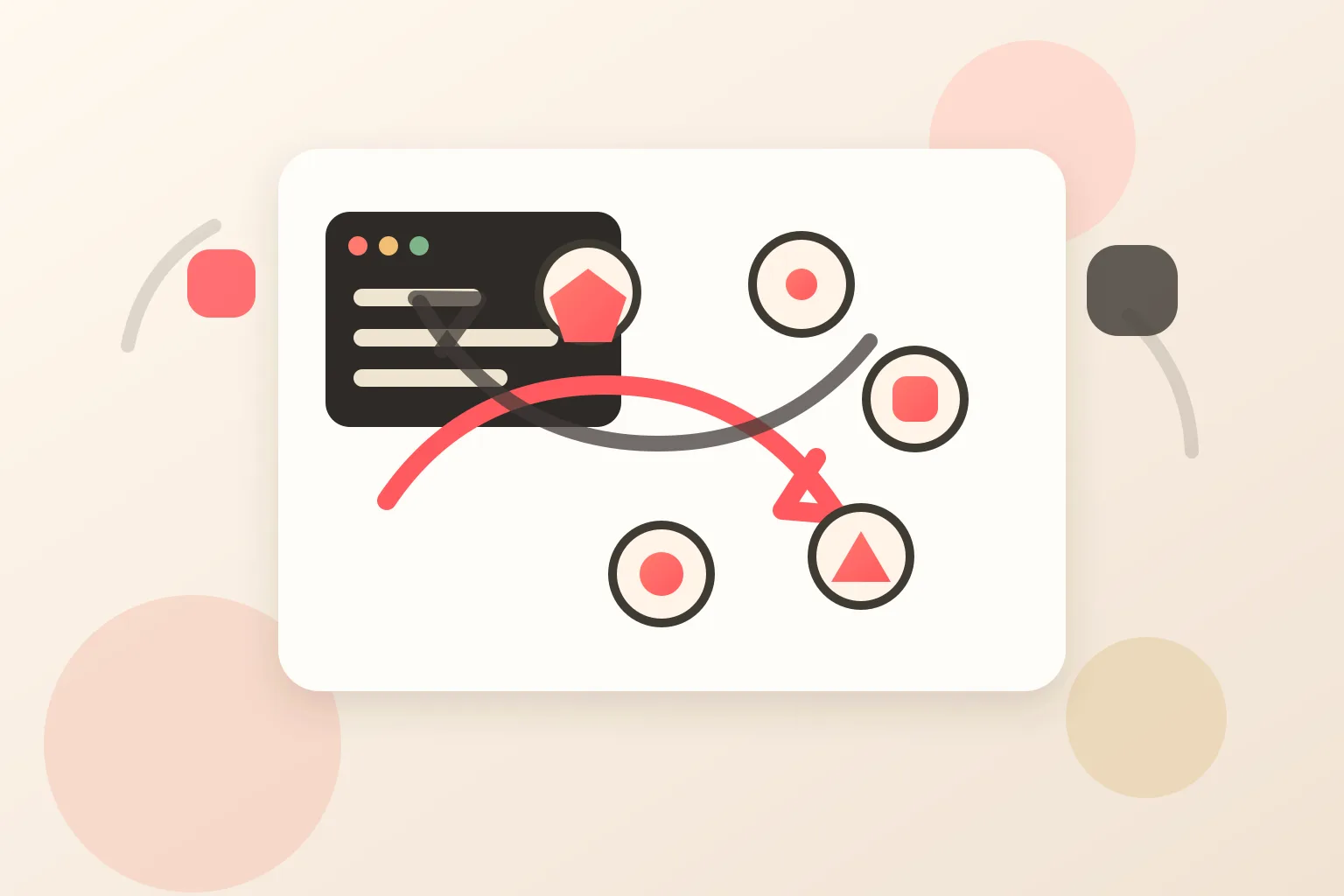
Loop engineering is a useful phrase because it moves the conversation away from prompt tricks. The interesting question is no longer "what should I type into Claude Code next?" It is "what system will decide the next step when I am not sitting there?"
That is the real shift behind Claude Code, Codex, and the newer generation of coding agents. A chat session is a person prompting a model. A loop is a control system: goal, context, tools, action, verification, state, repeat.
Addy Osmani's recent essay on loop engineering frames the same change from another angle: the developer is no longer only writing prompts, but designing the machinery that prompts the agent. Anthropic's own guidance reaches a similar boundary from the systems side. In Building Effective Agents, Anthropic separates workflows, where code orchestrates predictable paths, from agents, where the model dynamically chooses tool use and process. A Claude Code loop sits right on that line.
It is agentic because the model can inspect files, run commands, edit code, and decide what to do next. It is engineering because the loop only becomes useful when you constrain it.
The Loop Is Small. The System Around It Is Not
The core loop is almost boring:
- Read the current state.
- Pick the next action.
- Use a tool.
- Observe the result.
- Decide whether to continue.
That shape is not enough. A while-loop with a powerful model inside can waste money, make broad edits, repeat failed fixes, or declare victory too early. The engineering work lives around the loop: what state the agent sees, which tools it may use, what counts as done, which checks block progress, and when a human must re-enter.
Anthropic's context engineering post makes the key point: context is finite and has to be curated each time the agent samples from the model. In a coding loop, every command output, diff, test failure, file read, and user message competes for that budget. If the loop keeps appending everything, it gets slower and less reliable. If it summarizes too aggressively, it loses the reason a change was made.
So the first rule of Claude Code loop engineering is simple: do not confuse more context with better context. A good loop keeps a working set.
That working set usually includes:
| Layer | What it should contain |
|---|---|
| Goal | The concrete outcome, not a vague instruction |
| Plan | The current hypothesis and next few steps |
| Evidence | Test output, error traces, URLs, or code references that matter |
| State | What has already been tried and what failed |
| Stop rule | A check that decides whether the loop can end |
Without that state, an agent is just improvising in circles.
Goals Are Better Than Prompts
A prompt asks for an answer. A goal defines a condition the system can test.
"Fix the auth bug" is weak. "Users with expired sessions should be redirected to /login, the existing refresh-token path should still pass, and pnpm test auth should be green" is a loop-ready goal. The second version gives Claude Code three anchors: a behavior, a regression boundary, and a verification command.
This is why loop engineering tends to look less like copywriting and more like CI design. The prompt matters, but the stop condition matters more. If the stop condition is loose, the agent will often stop when the patch looks plausible. If the stop condition is executable, the loop has something outside itself to respect.
A practical Claude Code loop for a bug fix should carry a goal file or session note like this:
auth-loop.md

- Target behavior: expired sessions redirect to /login
- Must not break: refresh-token success path
- Verify: pnpm test auth && pnpm lint
- Already tried: middleware-only redirect caused OAuth callback regression
- Human review required before touching: billing, user deletion, migration files
That note is not decoration. It is the loop's memory.
Hooks Turn Wishes Into Guardrails
The easiest way to make an agent loop safer is to move recurring checks out of the model's discretion. Claude Code hooks are designed for exactly that: user-defined commands that run at specific lifecycle points, such as after edits, before tool use, or when Claude needs input. The important word is deterministic. A hook fires because the lifecycle event happened, not because the model remembered to be careful.
For a loop, hooks are where you put boring rules that must always run:
- format files after edits
- block writes to protected paths
- run a focused test after a relevant file changes
- re-inject compact project context after compaction
- notify a human when permission is needed
A small example:
{
  "hooks": {
    "PostToolUse": [
      {
        "matcher": "Edit|Write",
        "hooks": [
          {
            "type": "command",
            "command": "npm run lint -- --quiet"
          }
        ]
      }
    ]
  }
}
This is not glamorous. It is the difference between "Claude, please remember to lint" and "linting is part of the machine."
The more autonomous the loop gets, the more these boring rails matter. Anthropic's note on Claude Code becoming more autonomous highlights the same ingredients: checkpoints, subagents, hooks, and background tasks let developers delegate broader work while keeping recovery and verification paths in place (Anthropic).
Separate The Maker From The Checker
The most common failure in autonomous coding loops is premature confidence. The same agent that produced a patch is naturally biased toward accepting it. It has the narrative of the fix in its context. It knows why the change should work. That is exactly why it may miss what the change broke.
A better loop splits roles:
- Explorer: reads the codebase and identifies the likely change area
- Implementer: makes the smallest patch that satisfies the goal
- Verifier: runs tests, inspects the diff, and argues against the patch
- Summarizer: writes durable state for the next loop turn or human review
Claude Code's subagent and hook model makes this pattern practical. The hooks reference describes agent-based hooks that can spawn a subagent with file-reading and search tools, then return a structured allow/block decision. The docs mark agent hooks as experimental, so they should not be treated as a production contract yet. But the design direction is clear: verification becomes a first-class loop component, not a polite final paragraph.
That matters because "done" is not a feeling. It is a decision made by a checker with enough evidence.
For small work, the checker can be a command hook: tests pass or they do not. For ambiguous work, the checker may need another model pass with different instructions: compare the diff to the original goal, look for overreach, check whether source links still support claims, or confirm that public API behavior did not change.
The Agent SDK Makes The Loop Programmable
Claude Code is the interactive surface. The Claude Agent SDK is the programmable surface. Anthropic's Agent SDK overview lists the same core building blocks that make Claude Code useful: built-in tools, hooks, subagents, MCP, permissions, and sessions.
That matters for teams because a loop eventually wants to leave the terminal.
A local session is fine for one developer. A production loop needs scheduling, state storage, observability, permissions, and rollback. For example:
- A scheduled job opens yesterday's failed CI runs.
- The agent creates a narrow goal for each failure.
- A worktree is created for one failure at a time.
- Claude edits only inside that worktree.
- Hooks run lint and the focused test suite.
- A verifier reviews the diff against the goal.
- The loop opens a PR only if the verifier passes.
- The loop writes a state record either way.
That is not "let the AI code overnight". It is a small automation system where Claude is the planner and tool user, not the owner of the release process.
Cost And Blast Radius Are Product Requirements
Loop engineering has a hidden product question: what is the cost of being wrong?
If the loop is drafting a README section, the blast radius is low. If it is editing migrations, billing code, auth, or infra, the loop needs stricter permissions and more human gates. If it can call external APIs, post messages, spend credits, or merge PRs, the tool layer becomes part of your security model.
This is where Anthropic's advice to choose the simplest solution still holds. In many cases, a deterministic workflow plus one or two model calls is better than an open-ended agent. Use a loop when the task requires search, adaptation, and repeated correction. Do not use one just because the demo looks impressive.
A useful rule:
- If the path is known, build a workflow.
- If the path is unknown but the success condition is testable, build a loop.
- If neither the path nor the success condition is clear, keep a human in the loop.
What To Build First
The first Claude Code loop worth building is not a full autonomous engineer. It is a bounded fixer for one recurring pain.
Good candidates:
- repair flaky tests with a known command
- update docs after a merged API change
- triage dependency update failures
- run a security review before a PR is marked ready
- convert a repeated migration checklist into a goal file plus hooks
Bad candidates:
- redesign the whole app
- refactor a core subsystem without a narrow test boundary
- change billing, auth, or data deletion without human approval
- "improve code quality" as an open-ended loop
The reason is not model weakness. It is control. A loop is only as good as the feedback signal it receives.
The Takeaway
Claude Code loop engineering is not about making prompts more elaborate. It is about moving from conversation to control system.
The pieces are already visible: goals define the finish line, hooks enforce deterministic rules, subagents separate making from checking, context engineering keeps the model focused, and sessions preserve state across turns. The engineering challenge is deciding which parts should be model-driven and which parts should be boring code.
The best loops will feel less like magic and more like a disciplined build pipeline with a model inside it.
If you want to compare Claude, GPT, and Gemini behavior behind the same API while prototyping agent loops, onehop can be a practical test surface: OpenAI-compatible calls, one base URL, and multiple model families. New accounts can also start with free credit.
Related reading

OpenAI Agents SDK Native Sandbox and Manifest Guide
How OpenAI’s Agents SDK sandbox and Manifest let developers build safer file-working agents without custom orchestration.
June 16, 2026 · 25 min read
Google Antigravity CLI vs Gemini CLI: What Developers Need to Migrate Before June 18, 2026
Gemini CLI consumer access ends June 18, 2026. Here’s what changes, who is affected, and how to migrate terminal workflows.
June 15, 2026 · 24 min read
Call Qwen3.7 Plus with the OpenAI SDK via DashScope Compatible Mode
Port OpenAI SDK apps to Qwen3.7 Plus with base_url changes, thinking controls, long-context pricing, and runnable code.
July 23, 2026 · 25 min read