Claude Opus 4.8 vs GPT-5.5 vs Gemini 3.1 Pro: Long-Context API Pricing Compared
June 15, 2026 · 21 min read · Claude / GPT / Gemini
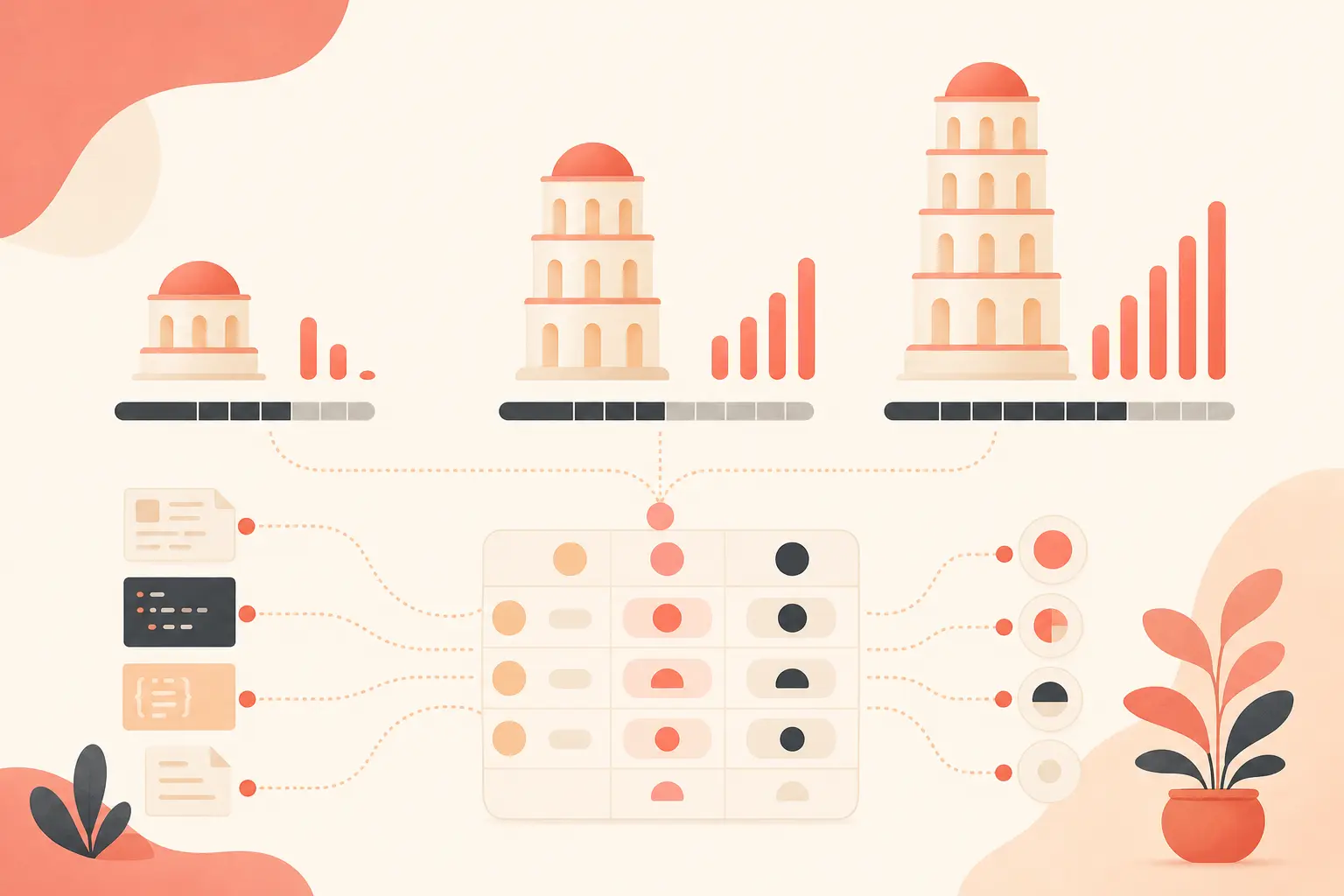
OpenAI’s GPT-5.5 page lists a 1,050,000-token context window and $5 input / $30 output per 1M tokens. Anthropic lists Claude Opus 4.8 at $5 / $25 with 1M context on the Claude API. Google prices Gemini 3.1 Pro Preview at $2 / $12 up to 200K-token prompts, then $4 / $18 above 200K.
That is the whole long-context fight in one sentence: GPT-5.5 buys you the largest stated window and a premium output rate, Claude Opus 4.8 matches the 1M-class workflow with cheaper output, and Gemini 3.1 Pro Preview has the sharpest price advantage, especially when your prompts stay below 200K tokens.

The Pricing Table Developers Actually Need
Here are the current first-party API list prices from the vendor docs, checked against official pages on June 15, 2026.
| Model | Input / 1M tokens | Output / 1M tokens | Max context | Output limit | Pricing cliff |
|---|---|---|---|---|---|
| GPT-5.5 | $5.00 | $30.00 | 1,050,000 | 128,000 | No prompt-size tier shown |
| Claude Opus 4.8 | $5.00 | $25.00 | 1M on Claude API | 128,000 | No prompt-size tier shown |
| Gemini 3.1 Pro Preview | $2.00 up to 200K prompt, $4.00 above | $12.00 up to 200K prompt, $18.00 above | 1M input | 64K | Price doubles on input above 200K |
OpenAI’s model doc describes GPT-5.5 as a frontier model for complex professional work and lists $5 input, $0.50 cached input, and $30 output per 1M tokens, plus the 1,050,000-token window (OpenAI). Anthropic’s public pricing page lists Opus 4.8 at $5 input, $25 output, $6.25 cache write, and $0.50 cache read per million tokens (Anthropic pricing). Its Opus 4.8 model notes say the model supports 1M token context by default on the Claude API, Amazon Bedrock, and Vertex AI, with 200K on Microsoft Foundry (Anthropic docs). Google’s Gemini pricing page lists gemini-3.1-pro-preview at $2 / $12 for prompts up to 200K tokens and $4 / $18 above 200K (Google pricing); the Gemini 3 guide lists 1M input context and up to 64K output for Gemini 3 models (Google Gemini 3 guide).
The trap: “per 1M tokens” makes the prices look linear. Gemini is not fully linear. The prompt-size tier matters.
The Cost Cliff: 200K Tokens Is the Line
For many developer agents, 200K tokens is not a big number. A medium repo plus package-lock.json, a few generated files, and a design doc can blow through it. A legal contract corpus or customer-support archive can do the same faster.
Rough first-party cost examples:
| Workload | GPT-5.5 | Claude Opus 4.8 | Gemini 3.1 Pro Preview |
|---|---|---|---|
| 100K input + 10K output | $0.80 | $0.75 | $0.32 |
| 250K input + 25K output | $2.00 | $1.88 | $1.45 |
| 1M input + 50K output | $6.50 | $6.25 | $4.90 |
Assumptions: standard text token pricing only, no batch discounts, no provider-specific caching savings, no extra tool charges, and Gemini’s higher tier applied when the prompt is above 200K tokens. Real bills can move if you use prompt caching, batch APIs, priority modes, fast modes, tools, or retries.
The useful takeaway is simple. Below 200K prompt tokens, Gemini 3.1 Pro Preview is dramatically cheaper on list price. Above 200K, it still undercuts GPT-5.5 and Opus 4.8 in these examples, but the gap narrows. Claude and GPT have flatter pricing surfaces, so cost forecasting is easier when prompt size varies wildly.

Context Window Is Not the Same as Useful Context
A 1M-token window lets you skip some retrieval engineering. It does not delete the need for selection, compression, and evals.
For whole-repo analysis, I would still avoid dumping the entire repository by default. Feed the model a manifest first: file tree, package metadata, build scripts, dependency graph, recently changed files, and test failures. Then add the files that matter. Long context is best used as breathing room, not as an excuse to stop designing the agent.
Claude Opus 4.8 is explicitly positioned by Anthropic for “complex reasoning, long-horizon agentic coding, and high-autonomy work” in its model notes (Anthropic docs). The same page calls out improvements in long-horizon agentic coding, tool triggering, compaction recovery, and long-context quality. Those are exactly the failure modes that show up in real coding agents after hour two: forgotten constraints, skipped tool calls, and bad recovery after summarization.
OpenAI positions GPT-5.5 for “coding and professional work” and gives it the biggest listed context window here: 1,050,000 tokens (OpenAI). That extra 50K over a nominal 1M is not a reason by itself to pick it, but it is useful margin when your orchestration layer adds system messages, tool schemas, traces, and retrieved files.
Google describes Gemini 3.1 Pro Preview as the Pro model for broad world knowledge, advanced reasoning across modalities, agentic capabilities, and vibe-coding on the pricing page and Gemini 3 guide (Google pricing, Google Gemini 3 guide). It also supports a gemini-3.1-pro-preview-customtools variant, which Google suggests when apps combine Bash and custom tools and need the model to prioritize custom tools. That is a very specific agent-builder clue.
Scenario Picks
If you are building a whole-repo coding agent, start with Claude Opus 4.8 or GPT-5.5, then benchmark Gemini 3.1 Pro Preview on your own traces. Claude’s $25 output rate gives it a direct cost edge over GPT-5.5 for verbose patch planning, code review, and multi-step tool loops. GPT-5.5 has the largest stated window and a strong coding/professional-work positioning. I would pick GPT-5.5 when the workflow benefits from OpenAI’s Responses API ecosystem or when your existing stack is already OpenAI-native.
If you are building a document-heavy analysis agent, Gemini 3.1 Pro Preview is the first model I would cost-test. At 100K input and 10K output, the list-price estimate is $0.32, less than half of Claude Opus 4.8 and GPT-5.5 in the table above. If your prompts often cross 200K, watch the cliff. The cliff is not fatal, but it changes your optimization target: keep frequently repeated boilerplate cached or summarized, and avoid attaching every PDF page when a routed subset is enough.
If you need stable cost forecasting, Claude Opus 4.8 is the cleanest of the three. Same $5 input as GPT-5.5, cheaper output, 1M context, and no 200K prompt tier in the listed pricing. For teams that sell agent runs as a feature, predictable output cost matters.
If you need the cheapest flagship long-context entry point, Gemini wins on first-party list price. The tradeoff is preview status and the tier boundary. Treat it like a serious candidate, not a default forever choice.
A Practical Routing Pattern
Do not hard-code one flagship model into your product. Route by prompt size, output risk, and task type.
A sane starting policy:
if prompt_tokens <= 200_000 and task is document-heavy:
    try Gemini 3.1 Pro Preview
elif task is long-running coding agent:
    try Claude Opus 4.8
elif task needs OpenAI-native agent tooling or the largest listed window:
    try GPT-5.5
else:
    run a small eval set across all three
If you want to test these models without wiring three vendors, onehop is the easy path: change one base URL to https://api.onehop.ai/v1, use OpenAI/Anthropic-compatible calls, and route Claude, GPT, and Gemini from one place. onehop says it is cheaper than first-party, gives new accounts $10 free credit, and does not require a card.
Example with the OpenAI SDK style:
from openai import OpenAI

client = OpenAI(
    api_key="ONEHOP_API_KEY",
    base_url="https://api.onehop.ai/v1",
)

response = client.chat.completions.create(
    model="claude-opus-4-8",
    messages=[
        {"role": "user", "content": "Review this repo manifest and list the riskiest files."}
    ],
)

print(response.choices[0].message.content)
The important part is not the SDK. It is the discipline: same task, same files, same scoring rubric, three models. Measure cost per successful run, not cost per token in isolation.
Bottom Line
For June 15, 2026, my default recommendations are:
- Pick Gemini 3.1 Pro Preview first for document-heavy workloads under 200K prompt tokens.
- Pick Claude Opus 4.8 first for long-running coding agents where output cost and tool reliability matter.
- Pick GPT-5.5 first when you want OpenAI-native agent infrastructure or the largest listed context window.
- Re-test above 200K tokens, because Gemini’s price tier changes the math.
- Use prompt caching and routing before you fine-tune your prompt into a giant expensive blob.
Long context is now table stakes. The real choice is where your agent spends money: input bulk, output verbosity, retries, or tool mistakes. If you want one endpoint to compare them quickly, you can call Claude and other models on onehop, then sign up for $10 free credit and run your own eval traces before committing.
Related reading
Call Qwen3.7 Plus with the OpenAI SDK via DashScope Compatible Mode
Port OpenAI SDK apps to Qwen3.7 Plus with base_url changes, thinking controls, long-context pricing, and runnable code.
July 23, 2026 · 25 min read

GPT-5.6 Sol vs Claude Fable 5 vs Gemini 3.1 Pro on SWE-Bench Pro
A developer-focused comparison of reported SWE-Bench Pro scores for Claude Fable 5, GPT-5.6 Sol, and Gemini 3.1 Pro.
July 23, 2026 · 21 min read

Claude Sonnet 5 Is Official: API ID, Pricing, Context Window, and What to Test First
Anthropic has officially released Claude Sonnet 5. Here is what changed for developers: claude-sonnet-5, intro pricing, 1M context, agents, coding, and migration checks.
June 30, 2026 · 12 min read