Claude Fable 5 API Safeguards: How Opus 4.8 Fallback Changes Developer Workflows
June 15, 2026 · 23 min read · Claude
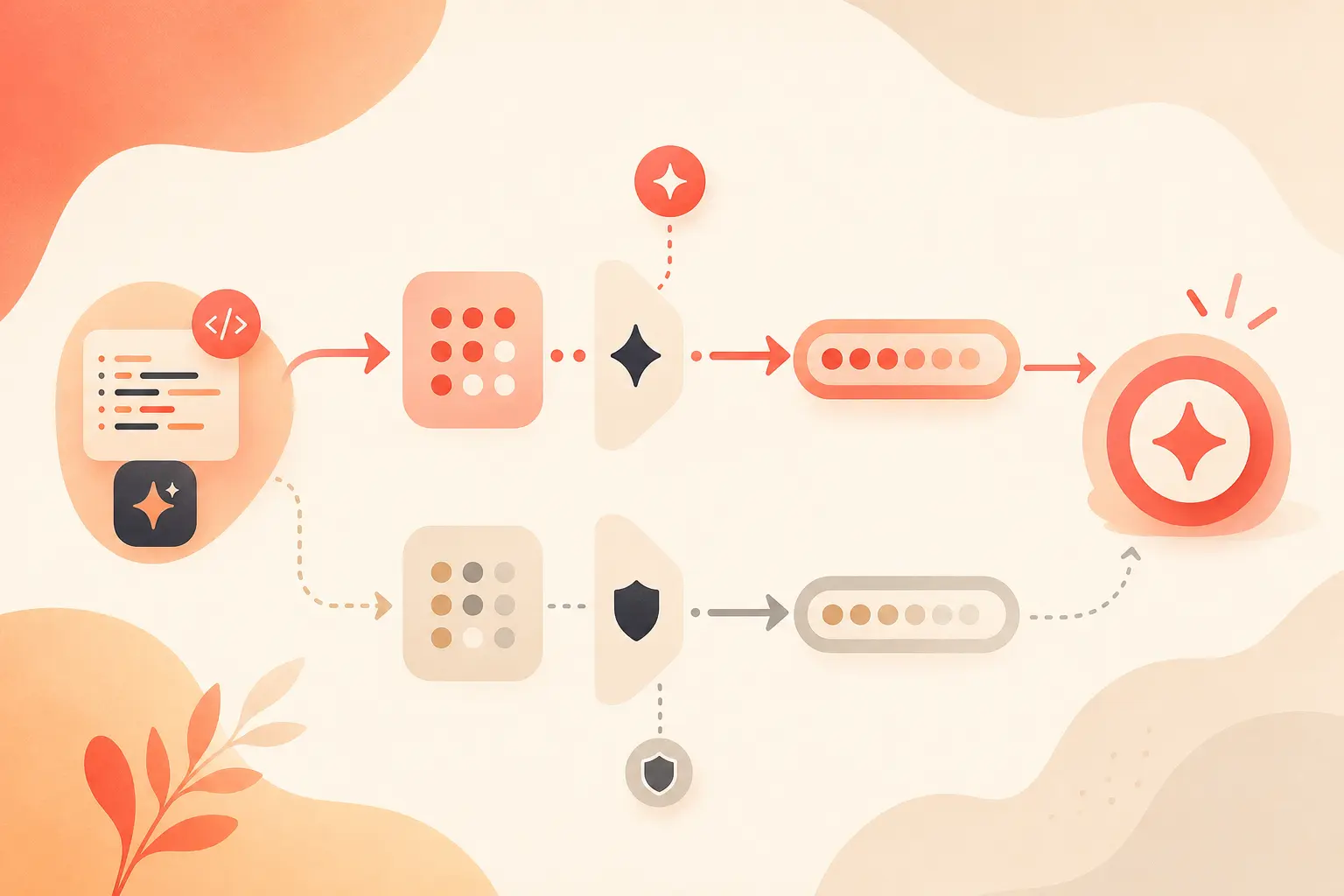
Claude Fable 5 launched on June 9 with a very developer-visible catch: some requests to claude-fable-5 do not get answered by Fable 5 at all. If Anthropic’s safeguards flag the request, the intended path is fallback to Claude Opus 4.8 instead.
That is the workflow change developers need to internalize. Model choice is no longer just a string in your config. For some cyber, biology, chemistry, and reasoning-extraction-adjacent requests, your app may ask for one model, pay according to a fallback path, and receive behavior from another model.
One important update first: as of June 15, 2026, Fable 5 is not currently available. Anthropic added a June 12 update saying it had suspended access to Claude Fable 5 and Claude Mythos 5 (Anthropic launch post), and published a separate statement saying a US government directive forced it to disable access for all customers while it works to restore service (Anthropic statement). The API mechanics still matter because they define how Anthropic designed the model to be used, and what teams should test before turning it back on in production.

What Changed
Anthropic described Fable 5 as a generally available “Mythos-class” model, while Mythos 5 is the more restricted version for vetted cyber and biology use cases. The launch post says Fable 5 and Mythos 5 share the same underlying capability tier, but Fable 5 adds safeguards that route some requests to Opus 4.8 instead of letting Fable answer directly (Anthropic).
The safeguards are intentionally broad. Anthropic said they trigger in less than 5% of sessions on average, and that more than 95% of Fable sessions involve no fallback at all (Anthropic). That sounds small until you build a developer tool, security product, bioinformatics assistant, code review agent, or document workflow where the “edge case” is the core product.
The product page is blunt about the routing behavior: flagged cybersecurity and biology requests are automatically routed to Opus 4.8, and users are not charged Fable prices for rerouted requests (Claude Fable product page). The Help Center adds the operational detail: in Claude apps, automatic switching is on by default, but API users must opt in and configure fallback themselves (Claude Help Center).
That last sentence is the trap. If your app assumes “Fable refused” is just another model error, you will ship a worse product than the Claude web app.
The Developer-Facing Facts
Here is the small table I would put in an engineering migration ticket:
| Item | Verified detail |
|---|---|
| Launch date | June 9, 2026 |
| Current access status | Suspended on June 12, 2026 |
| API model ID | claude-fable-5 |
| Fallback model | claude-opus-4-8 |
| Fable 5 price | $10 / 1M input tokens, $50 / 1M output tokens |
| Prompt caching | Existing 90% input token discount |
| US-only inference | 1.1x input and output token pricing |
| Average fallback incidence | Less than 5% of sessions |
| Data retention | 30-day retention required for Fable |
The price numbers come from both the launch post and product page: $10 per million input tokens and $50 per million output tokens (Anthropic, Claude Fable). The product page also says prompt caching keeps the existing 90% input token discount and US-only inference is available at 1.1x pricing (Claude Fable). Anthropic’s data residency docs say the 1.1x multiplier applies across token pricing categories for Opus 4.6, Sonnet 4.6, and later models, including input, output, cache writes, and cache reads (Claude API docs).

Fallback Is an API Contract, Not a UX Detail
For API users, the important response is not “an error.” Anthropic’s docs say a classifier block returns a normal HTTP 200 response with stop_reason: "refusal" and may include stop_details.category values such as cyber, bio, or reasoning_extraction (Claude Cookbook). That means your retry middleware, observability, and test assertions need to inspect the response body, not just HTTP status.
The recommended server-side pattern uses the beta fallback API:
curl https://api.anthropic.com/v1/messages \
  -H "x-api-key: $ANTHROPIC_API_KEY" \
  -H "anthropic-version: 2023-06-01" \
  -H "anthropic-beta: server-side-fallback-2026-06-01" \
  -H "content-type: application/json" \
  -d '{
    "model": "claude-fable-5",
    "max_tokens": 1024,
    "fallbacks": [{ "model": "claude-opus-4-8" }],
    "messages": [{ "role": "user", "content": "Summarize this security review." }]
  }'
Anthropic’s cookbook says server-side fallback is available on the native Claude API and Claude Platform on AWS, and that today it supports fallback from Fable 5 to Opus 4.8 (Claude Cookbook). For Bedrock, Vertex AI, Microsoft Foundry, Message Batches, or teams that want client-side control, Anthropic points to SDK middleware instead.
The product implication is simple: every request path needs fallback configuration. Chat turns, regenerate buttons, agent subcalls, tool continuations, eval harnesses, batch replay jobs. If one path omits fallback, users will see refusals where your main chat path would have recovered.
Billing Gets Weird Around Cache Boundaries
The billing rules are more developer-friendly than a naive retry, but only if you wire them correctly.
Anthropic’s Help Center says if a request is blocked before Fable produces output, the conversation switches to Opus immediately and the user is charged only at Opus rates. If a request is blocked midstream, Fable rates apply to the input and streamed tokens before the block, then Opus rates apply to the rest (Claude Help Center).
The cookbook adds the prompt-cache wrinkle. Direct classifier blocks are not billed for input tokens when no output has been returned. For fallback from Fable 5 to Opus 4.8, Anthropic bills fallback input tokens as a cache hit rather than a cache write when using server-side fallback. If you build client-side fallback, you may need to redeem a fallback_credit_token within 5 minutes, with the same org, workspace, system, messages, and tools fields (Claude Cookbook).
That requirement should scare anyone with aggressive prompt shaping. If your fallback retry “cleans up” the prompt, injects a new system message, strips tools, or rewrites conversation state, you may lose the intended cache-credit behavior and create noisy cost deltas.
How To Test Apps That Touch Cyber Or Biology
Do not test Fable 5 only with generic coding prompts. That will miss the exact integration point that makes Fable different.
Build an eval slice for “safe but classifier-adjacent” requests: vulnerability triage summaries, defensive threat-modeling language, SBOM review, biotech market documents, medical imaging admin workflows, benign molecular biology education, and any prompt that asks for chain-of-thought-like reasoning text. Anthropic’s Help Center says checks review not only the latest message, but also memory, connector content, web results, and files (Claude Help Center). So include realistic attachments and retrieved context, not toy prompts.
A solid test plan should verify five things:
stop_reason: "refusal"is handled as a successful response state, not an exception.- Server-side fallback is present on every request builder that can hit Fable.
- Observability records the final serving model, fallback hops, and refusal category when available.
- Cost dashboards separate Fable, Opus fallback, cache reads, cache writes, and US-only inference.
- Conversation state behaves after fallback. In Claude apps, the Help Center says the picker stays on Opus for the rest of the conversation after a switch; your app needs an equally explicit policy.
For multi-agent systems, test per-agent behavior. Anthropic’s cookbook warns that if one agent falls back, only that agent moves to the fallback model while others may remain on Fable (Claude Cookbook). That is fine if you planned it. It is painful if your evaluator assumes a single model served the whole task.
The Practical Takeaway
Fable 5’s launch was not just another frontier-model release with a higher price and better benchmark claims. It introduced a model-routing contract where safety classifiers can change the serving model inside a workflow. For normal coding and long-horizon agent tasks, Anthropic says most sessions stay on Fable. For security, biology, chemistry, and reasoning-extraction-adjacent products, fallback becomes part of correctness.
Because access is suspended as of June 15, the immediate move is not “flip production to Fable.” The move is to make your model layer fallback-aware now: log served model, test refusal paths, preserve prompt-cache semantics, and stop treating the requested model as the guaranteed model. When Fable access returns, teams that did this work will have a cleaner rollout than teams that only changed model="claude-fable-5".
Readers who want to try these models hands-on can call Claude and other models on onehop with an OpenAI-compatible API by changing one base_url: call Claude and other models on onehop. onehop is cheaper than first-party, and new accounts get $10 free credit with no card required: sign up for $10 free credit.
Related reading

Claude Sonnet 5 Is Official: API ID, Pricing, Context Window, and What to Test First
Anthropic has officially released Claude Sonnet 5. Here is what changed for developers: claude-sonnet-5, intro pricing, 1M context, agents, coding, and migration checks.
June 30, 2026 · 12 min read
Using Grok Build in Warp with a SuperGrok or X Premium Subscription
xAI now lets Warp users connect Grok or X Premium and run grok-build-0.1 inside terminal agent workflows.
June 16, 2026 · 20 min read
Call Qwen3.7 Plus with the OpenAI SDK via DashScope Compatible Mode
Port OpenAI SDK apps to Qwen3.7 Plus with base_url changes, thinking controls, long-context pricing, and runnable code.
July 23, 2026 · 25 min read